Across the Atlantic: Jake Ward's 1969 Camaro
Table of Contents
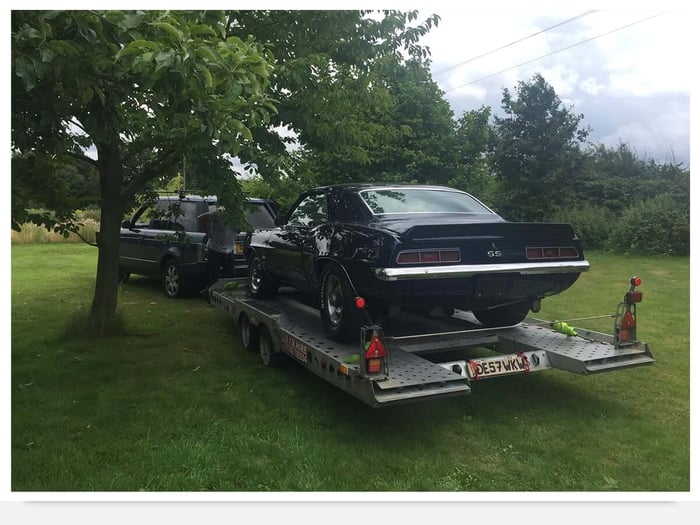
Jake Ward knew he wanted a 1969 Camaro. Like a lot of enthusiasts, the idea started long before the right car came along. In 2016, while working offshore as a subsea engineer in West Africa, Jake found what looked like the opportunity to finally make it happen.
The car was a 1969 Chevrolet Camaro that had been shipped from Florida to the United Kingdom. Jake bought it sight unseen and brought it home to North Yorkshire.
In hindsight, he will be the first to admit that may not have been the best idea.
After registering the car in the UK, Jake managed about 10 miles behind the wheel before realizing the first-gen was going to need a much deeper plan. Once the true condition of the body and structure came to light, the project quickly moved beyond a straightforward restoration.
Jake had a choice to make. He could spend the money to return the car to a fairly standard 1969 Camaro, or he could build the version he had always wanted.
He chose the second option.
The Detroit Speed Direction
The direction of the build changed when Jake discovered Detroit Speed through the Lateral-G forum. Reading about Kyle Tucker’s work, Mark Stielow’s engineering approach, and the development behind the first-gen Camaro platform gave him a clearer vision for what the car could become.
The goal was no longer just to get the car back on the road.
Jake wanted to build a classic muscle car that kept its original character, but had the stance, confidence, handling, and drivability of a modern performance car. It needed to look like a first-gen, feel like a first-gen, and still be capable enough to enjoy on real roads.
That is where the Detroit Speed influence became the foundation of the project.
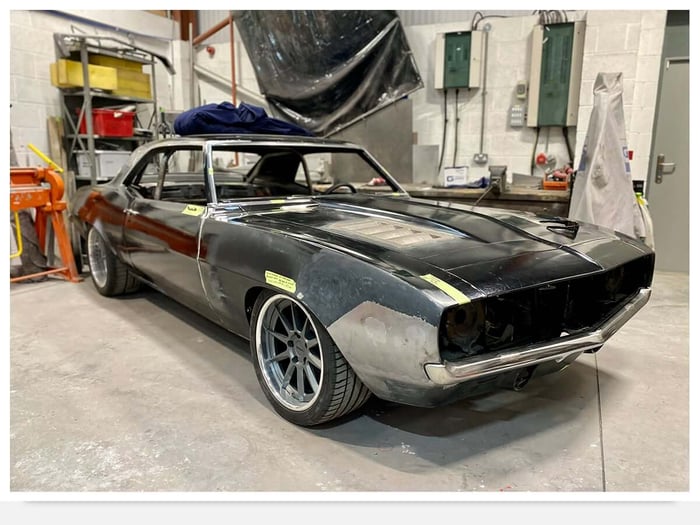
Over the next decade, Jake completed nearly everything on the car himself, apart from the paint. That would be a serious undertaking under normal circumstances, but his work schedule made it even more demanding. For much of the year, Jake was away from home working offshore for more than seven months at a time.
When he was home, the build moved forward at night.
After family time, Jake would head out to the car and keep chipping away at it. Researching components, refining the build specification, fabricating, designing, and re-engineering all became part of the process. As the project evolved, so did the car.
What began as a restoration became a complete pro-touring build centered around Detroit Speed engineering, a modern driveline, and the supporting parts needed to make everything work together.
Jake described the build as being designed to accommodate essentially the Detroit Speed catalog for a 1969 Camaro. That kind of commitment says a lot about the intent behind the car. This was never about adding parts for the sake of it. It was about building the right foundation, the right geometry, and the right feel.
For Jake, the chassis and suspension package mattered just as much as the engine.
There were plenty of other manufacturers he could have chosen, but after researching the options and speaking with Mark Stielow, Jake came to appreciate the engineering, testing, and real-world development behind every Detroit Speed component.
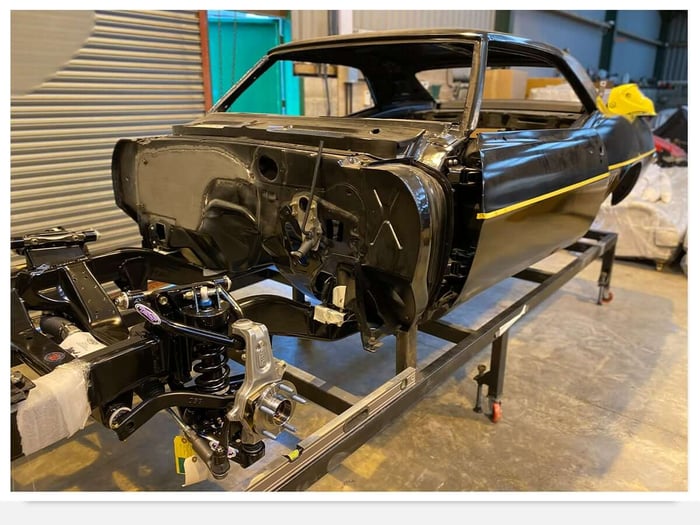
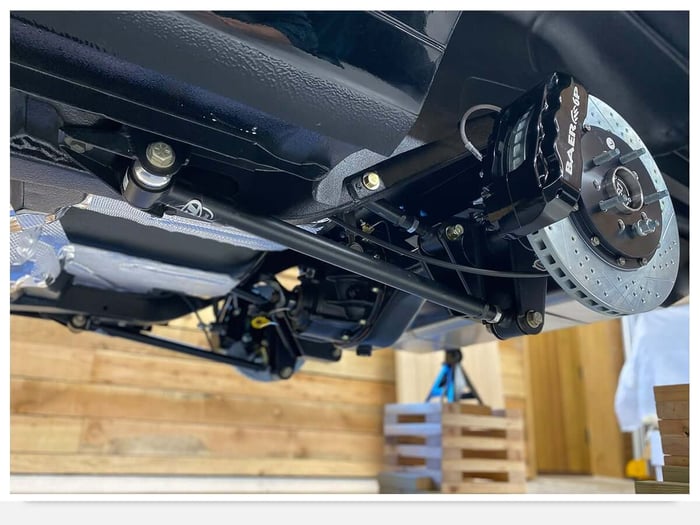
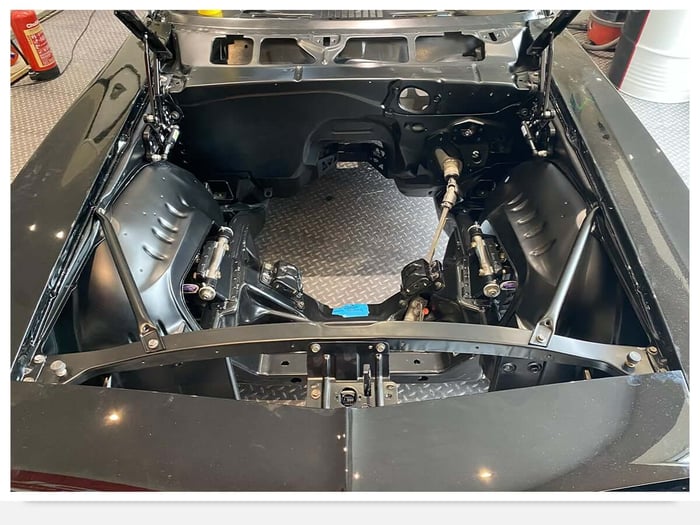
That direction shaped the foundation of the car. Up front, our Hydroformed Subframe gave the first-gen Camaro improved suspension geometry, increased rigidity, modern steering response, and the confidence needed to put serious power to use. Out back, our QUADRALink Rear Suspension helped transform the car’s ability to plant the tire, stay composed under load, and deliver predictable grip through real-world driving conditions. Mini-Tubs opened up the room needed for a wider rear tire package, giving the car the stance and traction to match its performance intent.
Together, those components did more than update the car. They gave it balance.
The goal was never to make Jake’s ’69 feel numb or overly modern. It was to preserve the character of a first-gen while giving it the control, stability, tire clearance, and capability needed to drive harder, corner flatter, and inspire more confidence from behind the wheel.
That is the kind of detail that shows up every time the car is driven, and it is exactly what defines a proper Detroit Speed-equipped first-gen build.
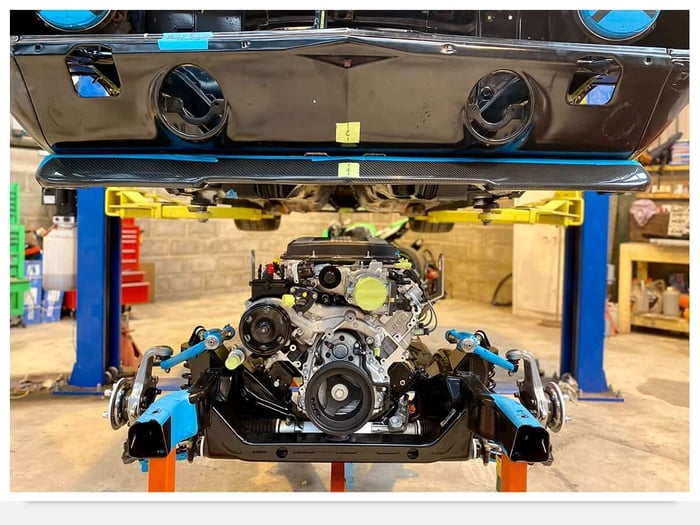
Under the hood, Jake’s Camaro now runs a GM LT4 engine. The modern powerplant gives the car the performance to match the rest of the build, bringing serious power to a chassis that was planned around using it properly.
In June 2026, after more than 10 years of work, Jake fired the car in its completed specification and drove it on UK roads for the first time.
The plan was simple. Go around the block, complete the initial checks, and bring it back home.
That did not happen.
Jake ended up driving 50 miles before turning around.
After a decade of late nights, family milestones, problem solving, and persistence, the first-gen finally gave something back. It was the moment every long-term build works toward. The car was on the road, the LT4 was alive, and the chassis felt like it was ready for more.
There were still minor snags to work through, as there always are with a fresh build, but the bigger picture was clear.
The car worked. More importantly, it made Jake want to keep driving.
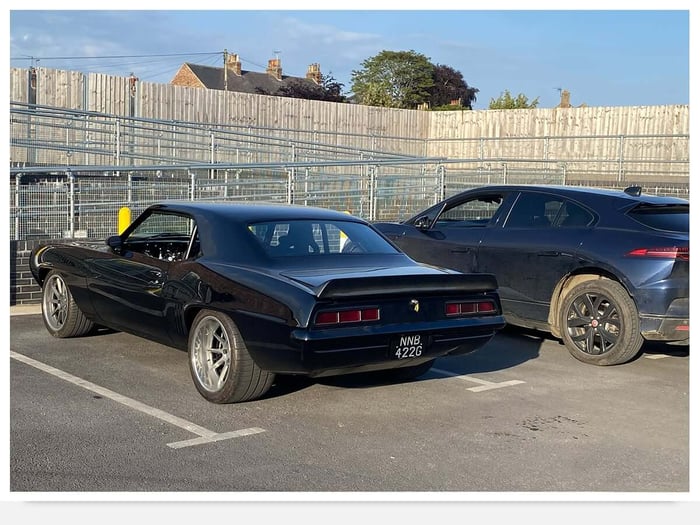
In the United States, seeing a Detroit Speed-equipped first-gen at an event, on an autocross course, or out on the road is not unusual. In the United Kingdom, builds like Jake’s are still rare.
That is part of what makes this car special.
This ’69 carries Detroit Speed DNA thousands of miles from where the platform was developed, proving that the same engineering principles work no matter where the car lives. North Yorkshire roads are a long way from Mooresville, North Carolina, but the goal is the same: build a classic that can be driven with confidence.
For Jake, the finished car is also a chance to show what can be achieved when these platforms are built properly. He plans to take the Camaro to shows across the UK and hopes to eventually bring it to events throughout Europe.
In a place where American pro-touring builds are still relatively uncommon, Jake’s first-gen is going to stand out for more than just the way it looks.
It represents the full idea behind Detroit Speed: classic style, modern capability, and a car that is meant to be used.
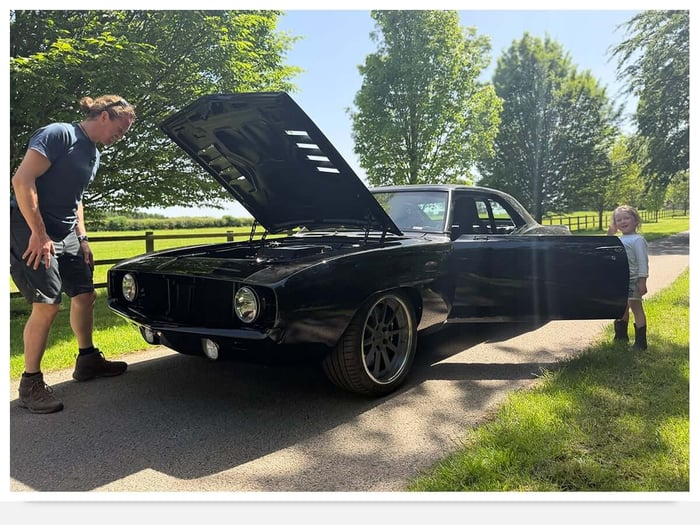
Since buying the Camaro in 2016, life has moved forward for Jake in a big way. He met his wife, had two children, moved homes twice, and continued working offshore for much of each year.
Through all of that, the car stayed constant.
The project took far longer than the one or two years Jake first imagined, but the finished result carries the story of that time. It is not just a 1969 Camaro with modern power and Detroit Speed components. It is a decade of work, family, patience, and commitment built into one car.
From Florida to North Yorkshire, Jake Ward’s first-gen is proof that the passion for these cars does not stop at the shoreline.
It follows the builders willing to put in the time.
Many thanks to Jake and the Ward family for allowing us to share their story. Follow Jake on Instagram at @jzward_1.
FAQs
Where is Jake Ward’s Camaro located?
Jake’s Camaro is based in the United Kingdom, making it a strong example of Detroit Speed performance reaching beyond the United States and into the global pro-touring community.
Why did Jake choose Detroit Speed components for his Camaro?
Jake researched multiple options before choosing Detroit Speed. After learning more about the engineering, testing, and real-world development behind DSE products, he wanted a proven foundation for his first-gen Camaro.
What Detroit Speed components were used in the build?
The car utilizes key Detroit Speed components for first-gen Camaros, including a DSE Subframe, QUADRALink rear suspension, Mini-Tubs, and supporting chassis components that help improve stance, handling, grip, and overall drivability.
Was the goal to make the Camaro feel like a modern car?
No. The goal was not to make the Camaro feel numb or overly modern. The build was focused on preserving the character of the classic first-gen Camaro while adding the control, stability, and capability needed to drive it harder and more often.
What makes this build special?
This Camaro blends Jake Ward’s personal vision, UK-based enthusiast passion, and Detroit Speed engineering into a first-gen build that feels classic in spirit but far more capable from behind the wheel.