One Of One: Will Irby's 1965 Plymouth Barracuda
Table of Contents
From Budget Beater to Big Ambitions
Some cars stay with you because of memories. Others stick around because you just can’t stop improving them. For Will Irby, his 1965 Plymouth Barracuda has been both.
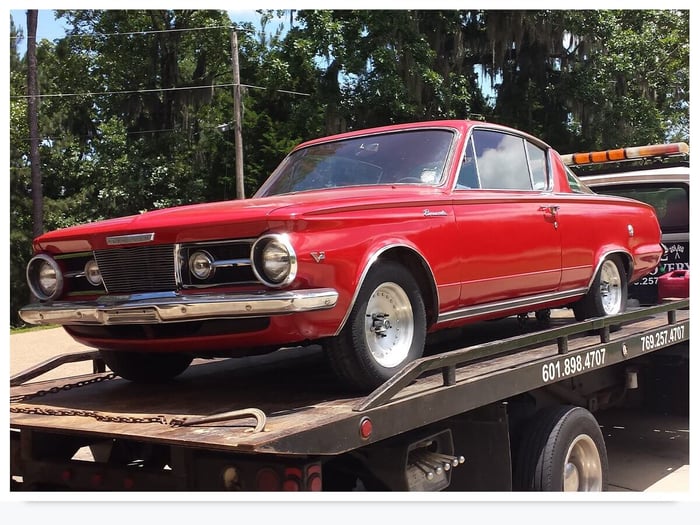
Will bought the car in 1978 for $375. It wasn’t much to look at back then - silver paint, red interior, and a tired 273 under the hood - but something about it spoke to him. Before long, he swapped in a stronger 340 and an 8¾-inch rear end, repainted it Viper Red, and spent the next several decades driving, tweaking, and dreaming about what it could become.
By 2015, it was time to turn those dreams into reality. He wanted a car that wasn’t just fast in a straight line but would handle as precisely as the stock cars he once drove during the Dale Jarrett Driving Experience at Talladega. That experience changed everything. “I couldn’t believe how solid and predictable those cars felt,” Will says. “I wanted my Barracuda to drive the same way.”
Choosing Detroit Speed
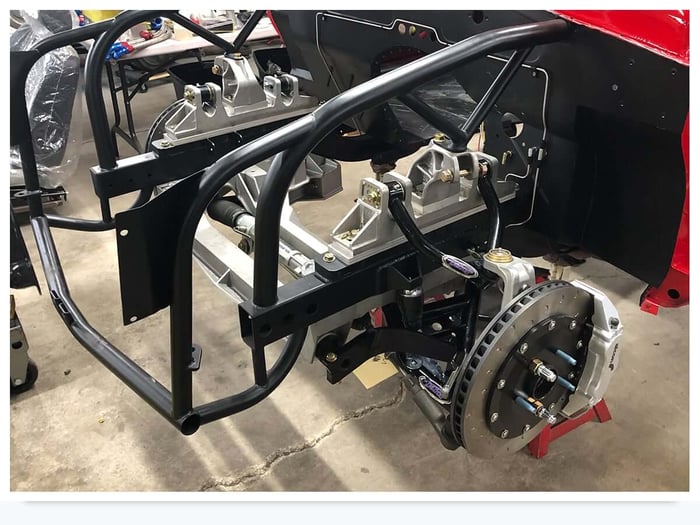
To reach that level of handling and precision, Will partnered with Hot Rod Chassis and Cycle in Addison, Illinois. He knew the car needed a modern suspension system that would give it strength, geometry, and feel unlike anything that came from the factory in 1965. The answer came in the form of Detroit Speed’s Alumaframe front suspension system.
Originally designed for 1964-1970 Mustangs, the Alumaframe gave Will everything he wanted. It became the foundation of the project. Kevin Tully and the team at Hot Rod Chassis and Cycle built an all-new full frame and carefully designed the front section around the Alumaframe’s structure. Frame spacing, mounting points, and clearances were adjusted to make it fit perfectly under the Barracuda’s body.
The result is a front end that completely redefined the car. The Detroit Speed Alumaframe brought modern geometry, better rigidity, and smoother steering feedback. The car no longer felt like a vintage A-body. It handled with the precision and confidence of a modern performance machine.
Will remembers the first drive after the suspension was finished. “It just feels right. It reacts fast but stays composed. I don’t have to fight it anymore. It works with me.”
Modern Balance and Feel
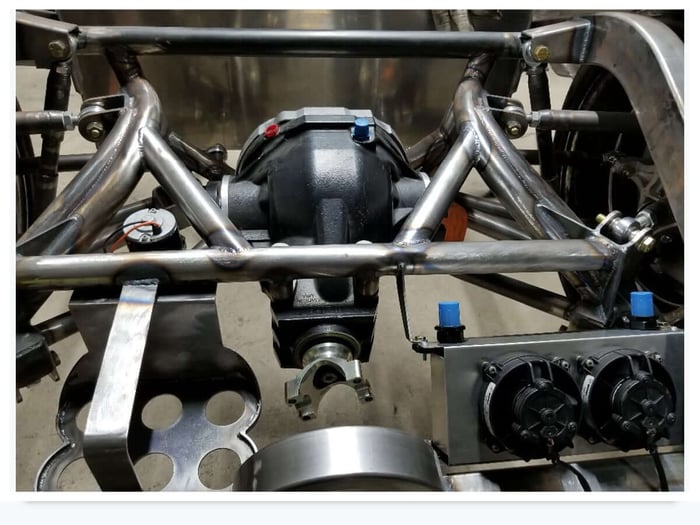
The Alumaframe didn’t act alone. To make the most of the new foundation, Will added Alcon brakes for serious control and stopping power. Hot Rod Chassis and Cycle also added an independent rear suspension of their own design, giving the Barracuda perfect balance from front to rear. With everything working together, the car feels as though it was engineered as a new platform, not something that rolled off the line sixty years ago.
Will says the Detroit Speed system was the smartest investment in the entire build. “Everything else built around (the Alumaframe) makes sense because that front suspension sets the tone. It turns the Barracuda into a completely different car.”
The Finished Product
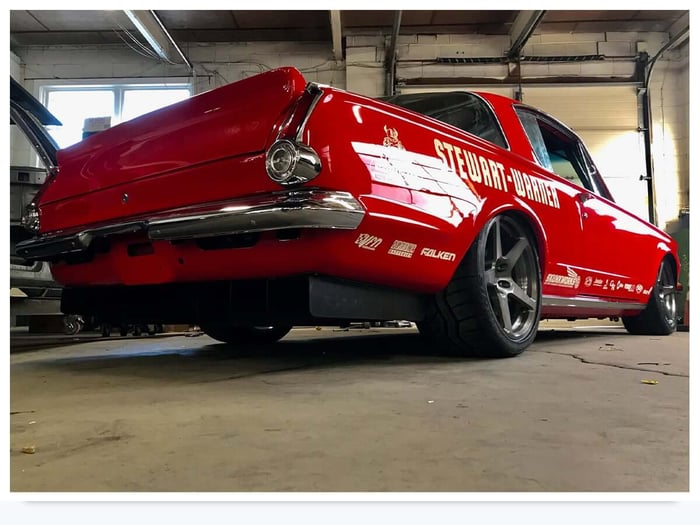
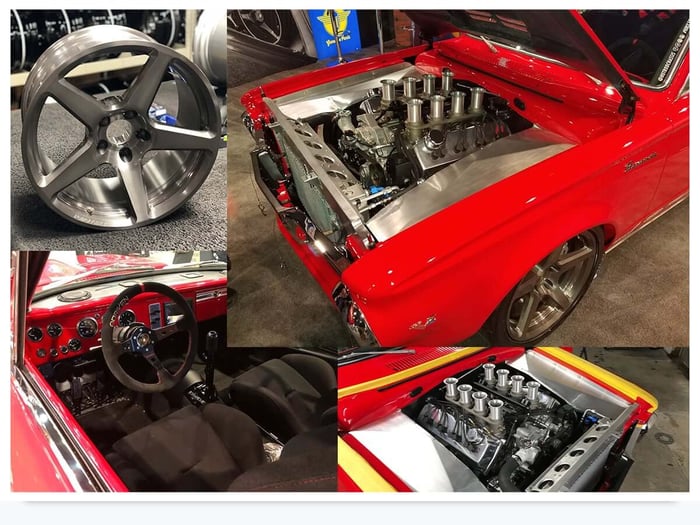
The Barracuda rides on Forgeline CF1 wheels wrapped in Falken Azenis tires, and every detail was chosen for performance. Power comes from an Arrow/Prefix 433-cubic-inch aluminum Gen III Hemi, backed by a Tremec 6-speed with a PPG sequential conversion. It is fast, but it is the balance and control that make it special.
Inside, everything is built for purpose. Recaro Speed seats, Simpson harnesses, and a Stewart-Warner gauge cluster give it a focused, track-ready look while staying comfortable for driving events. The interior layout is simple, clean, and functional, just like the rest of the build.
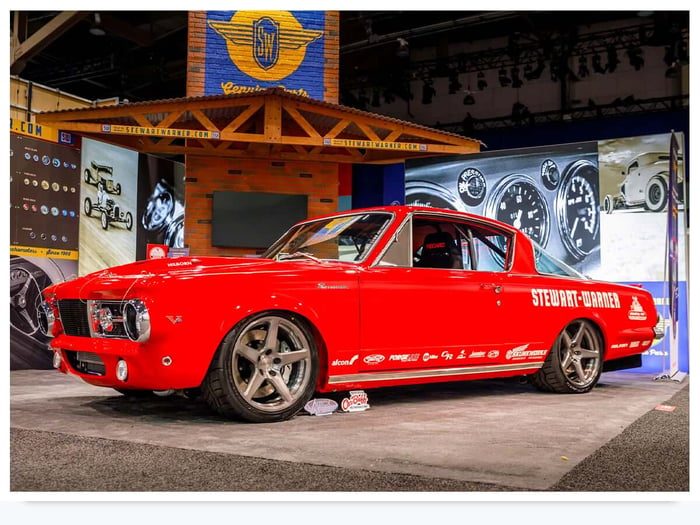
You might have seen the car at SEMA or Cruisin’ the Coast, where it always draws a crowd. People notice the stance, the craftsmanship, and the way it sits perfectly on the road. But the real secret hides underneath, where the Detroit Speed Alumaframe quietly does its job, turning this once-basic Barracuda into a world-class machine.
Built to Drive, Built to Last
After nearly fifty years with the car, Will knows this Barracuda better than anyone. “There’s not another ’65 Barracuda like mine,” he says proudly. “I consider it the finest on the planet.”
He is right. The car is proof that the right foundation makes all the difference. The Detroit Speed Alumaframe gave this vintage Mopar modern handling without losing its heart.
For Will, every drive makes the years of effort worthwhile. “The time and money are easy to forget once you’re behind the wheel,” he says. “That’s when it all makes sense.”
FAQs
What separates this build from a typical long-term project car?
Most projects evolve in small steps. This one had a hard reset. Once Will experienced what a truly engineered chassis feels like, every future decision was filtered through that lens. The Barracuda stopped being a collection of upgrades and became a system built around precision.
Why was the Detroit Speed Alumaframe chosen as the foundation?
The Alumaframe delivers modern suspension geometry, stiffness, and steering feel in a compact package. It gave the build a proven performance backbone and allowed everything else to be designed around a system that actually works as intended at speed.
How was the Alumaframe adapted to a 1965 Barracuda?
Hot Rod Chassis and Cycle built a full custom frame and engineered the front structure specifically around the Detroit Speed Alumaframe. Mounting points, spacing, and clearances were tailored to fit the Barracuda body while preserving the suspension’s geometry.
What role did Detroit Speed play in the car’s driving character?
The Alumaframe sets the tone. It transformed the car from a vintage A-body into something that reacts quickly, stays composed, and communicates through the wheel. Everything added afterward supports that foundation rather than fighting it.
Was the goal nostalgia, or redefining what a ’65 Barracuda could be?
Redefinition. The look nods to its roots, but the driving experience lives in the present. The car keeps its identity while delivering modern control, feedback, and confidence that simply didn’t exist when it was new.